OVERVIEW
Unforgettable 2-Day Birding Adventure Near Quito
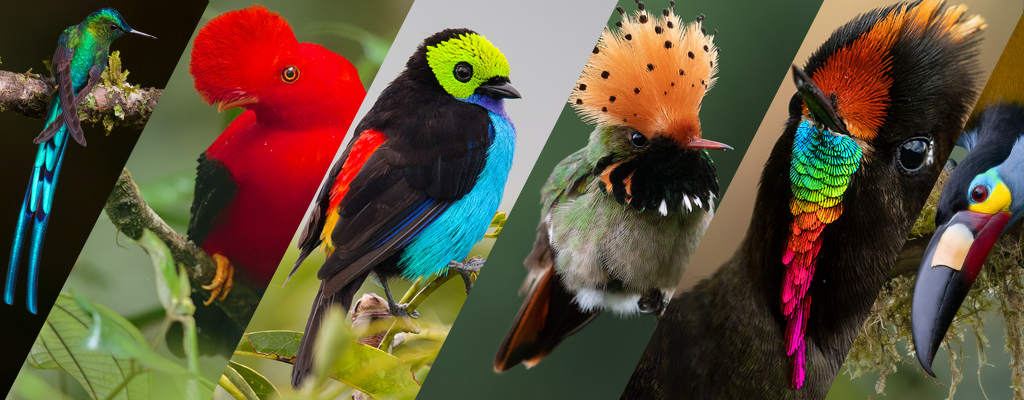
Embark on the ultimate birding journey near Quito, led by Ecuador’s top birdwatching guides. Begin your adventure in the breathtaking montane forests, alive with the colorful mountain-tanagers, rare antpittas, soaring raptors, and the mesmerizing color of unique hummingbird species. Continue with vehicle-assisted birding along the renowned "Hummingbird Route of Ecuador,” revealing a mosaic of diverse microclimates, each brimming with localized birdlife.
On day two, immerse yourself in the wonders of San Jorge Eco-Lodge Tandayapa Hummingbird Sanctuary, the crown jewel of cloud forest birding in Ecuador. Explore exclusive birding trails, where vibrant tanagers, toucans, elusive antbirds, and trogons glide effortlessly through their pristine habitat, before encountering an unrivaled diversity of hummingbird species, all in the heart of the valley that holds the world record for hummingbird diversity.
DETAILED ITINERARY
DAY 1
5:30 AM Pick-up from any hotel in Quito.
Birding San Jorge Eco-lodge Quito, and the Renowned Hummingbird Route:
Our adventure begins at San Jorge Eco-Lodge Quito, where you’ll enjoy a hot cup of Ecuadorian coffee or chocolate in the vibrant “Cucayo” breakfast room.After a delightful breakfast, we’ll set out to explore the lodge’s unique surroundings.
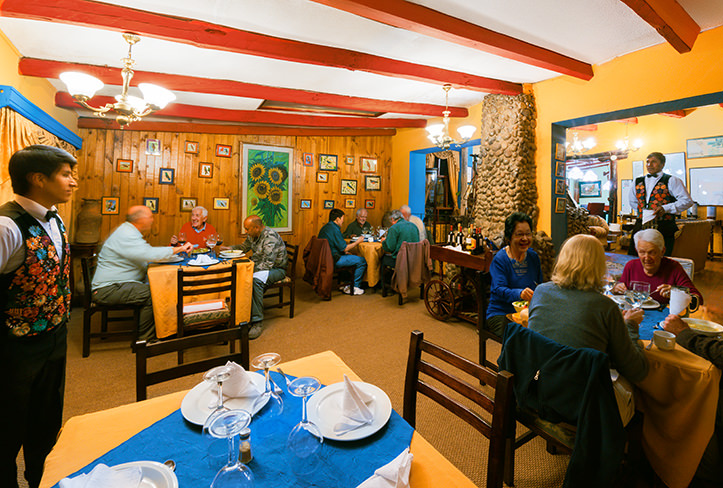 Savor the most delicious and freshest Ecuadorian dishes in the warm and cozy atmosphere of our Cucayo Restaurant.
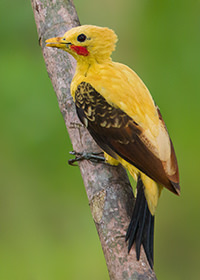
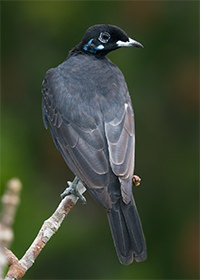
Wander through the lush gardens and captivating Andean forest as we search for bird species found nowhere else, such as the Tufted Tit-Tyrant, Crimson-mantled Woodpecker, Scarlet-bellied Mountain-Tanager, Buff-breasted Mountain-Tanager, Blue-and-Yellow Tanager, Band-tailed Seedeater, Undulated Antpitta, Red-crested Cotinga, and Streak-throated Bush-Tyrant. With a bit of luck, we may even spot the majestic Andean Condor soaring overhead.
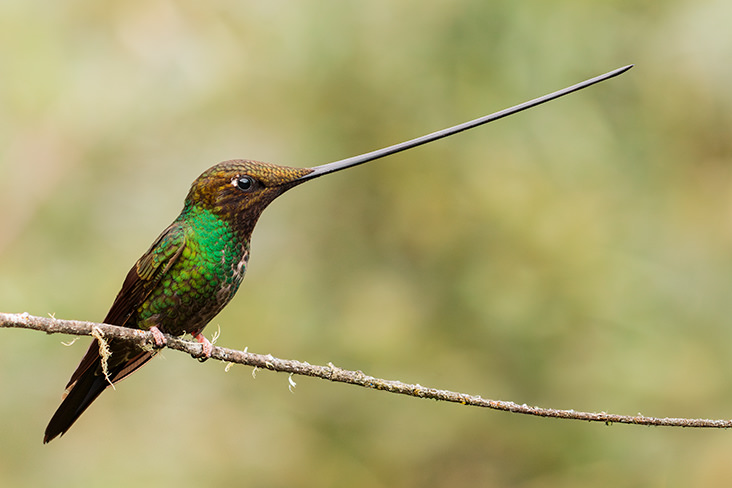 The extraordinary Sword-billed Hummingbird is a frequent and captivating sight at San Jorge Eco-lodge Quito. © Luis Alcivar
Before venturing to the renowned Hummingbird Route of Ecuador, we’ll first visit the lodge’s hummingbird feeders, offering the chance to observe an impressive array of species, including the Sapphire-vented Puffleg, Black-tailed Trainbearer, Green-tailed Trainbearer, Sparkling Violetear, White-bellied Woodstar, Tyrian Metaltail, Purple-backed Thornbill, and one of the most extraordinary and unique species in the world, the Sword-billed Hummingbird.
After a morning packed with inter-Andean species, we drive and bird along a charming road that runs through the lower slope of Pichincha Volcano. Birding along this road is crucial to record several upper-Andean specialist including the stunning Golden-crowned Tanager, Blue-backed Conebill, Black-chested Mountain-Tanager, White-browed Spinetail, Undulated Antpitta, Chestnut-naped Antpitta, Rufous Antpitta, Barred Fruiteater, Andean Pygmy-Owl, White-throated Screech-Owl, Golden-breasted Puffleg, Great Sapphirewing, and, many more.
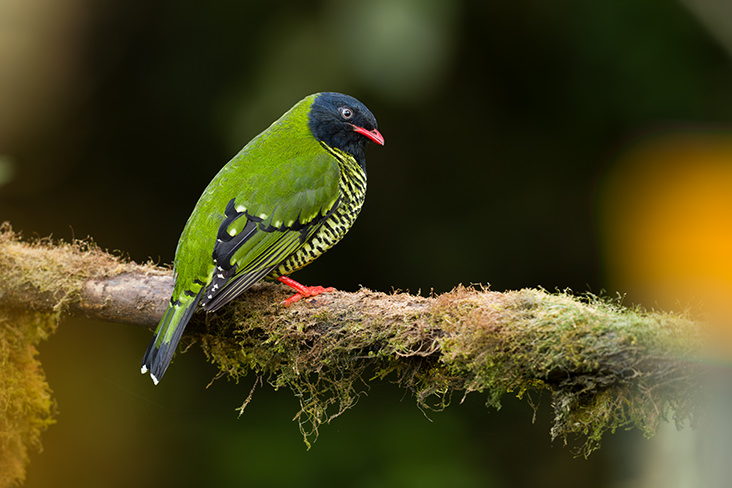 We’ll search for the iconic Barred Fruiteater in the lush upper Andean valleys above our Quito lodge. © Luis Alcivar
The slopes of Pichincha Volcano are home to the critically endangered Black-breasted Puffleg, with a bit of luck we might see this rarity. At around noon, we have our boxed lunch surrounded by stunning Andean landscape to then begin our descend down the "Old Nono-Mindo Road" or "Hummingbird Route" which connects the imposing Andean ridges with the lushy cloud forest of Tandayapa.
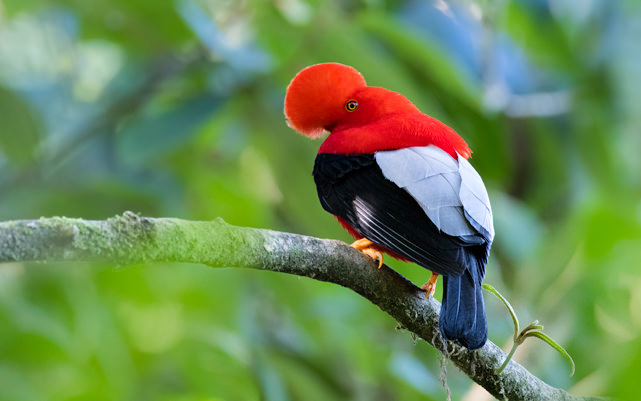 The Andean Cock-of-the-rock leks in the the upper valley of Tandayapa © Luis Alcivar
We will slowly descend and bird along the old Nono-Mindo road, making strategic stops to look out for a wide variety of birds including the highly sought-after Plate-billed Mountain-Toucan,  Plushcap, Hooded Mountain-Tanager, Rufous-breasted Chat-Tyrant, Slaty-backed Chat-Tyrant, Andean Guan, Torrent Duck, White-capped Dipper, Masked Trogon, Beautiful Jay, Collared Inca, Mountain Velvetbreast, Burrowing Owl, Western Hemispingus, Grass-green Tanager, White-rumped Hawk, and, many more. In the late afternoon, we make one last stop to delight our eyes with Ecuador's most iconic and stunning bird species, the Andean Cock-of-the-rock. In this location, several males gather to engage in competitive display (LEK). We will see them fly around and listen to their raucous call. With a bit of luck, the cocks will be at a very close distance, if not, we will will use our spotting scope to fully appreciate this bird's vivid color.
Overnight: San Jorge Eco-lodge Tandayapa Hummingbird Sanctuary.
DAY 2
Birding San Jorge Eco-lodge Tandayapa - Hummingbird Sanctuary:
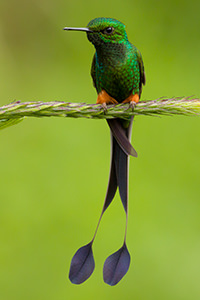
We wake up in the heart of the famous Tandayapa valley, a charming little valley that holds the world record for the highest number of hummingbird species recorded in a year, 42 species! We begin the day birding the 4 observation decks overlooking our private reserve. We will have the opportunity to see an incredible amount of bird species before breakfast and without having to engage in much walking.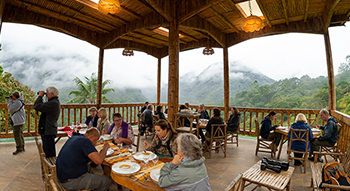 The bird feeders and fruit trees surrounding the breakfast room and the observation decks are visited by multicolored bird species like the Blue-winged Mountain-Tanager, Toucan Barbet, Red-headed Barbet, Golden-headed Quetzal, Crested Quetzal, Streak-capped Treehunter, Squirrel Cuckoo, Three-striped Warbler, White-winged Becard, Metallic-green Tanager, Masked Trogon, Crimson-rumped Toucanet, Pale-mandibled Aracari, Golden-naped Tanager, Golden Tanager, Flame-faced Tanager, Silver-throated Tanager, Swallow Tanager, and, many more. Additionally, the hummingbird feeders in front of the breakfast room are visited by abounding hummingbird species, including, the Tawny-bellied Hermit, Western Emerald, Gorgeted Sunangel, Wedge-billed Hummingibird, Purple-throated Woodstar, Purple-bibbed Whitetip, and, of course, the iconic Booted Racket-tail and Violet-tailed Sylph.
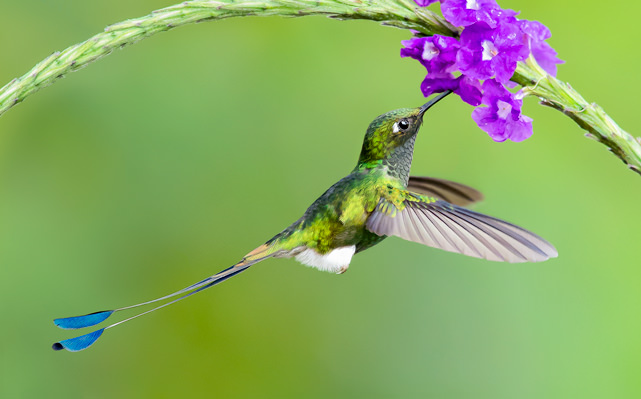 The exotic Booted Racket-tails are commonly seen at San Jorge Eco-lodge Tandayapa. © Luis Alcivar
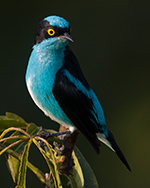
After a very birdy morning, we have breakfast, and, for the rest of the day, we will explore several trails at our private cloud forest reserve. Trail birding will deliver different bird species including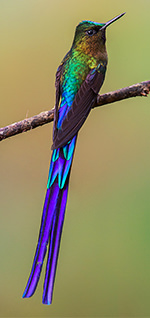 the Scaled Antpitta, Ochre-breasted Antpitta, Rufous-breasted Antthrush, White-winged Tanager, Beryl-spangled Tanager, Ringed Kingfisher, Chestnut-breasted Chlorophonia, Immaculate Antbird, Plain Antvireo, Uniform Antshrike, Russet-crowned Warbler, Black-and-chestnut Eagle, Bat Falcon, Barred Hawk, White-throated Quail-Dove, Plate-billed Mountain-Toucan, Cloud-Forest Pygmy Owl, and, with some luck, the enchanted White-faced Nunbird, and, the secretive Wattled Guan. We will have lunch at our open-air restaurant overlooking the impressive valley of Tandayapa.
5:00 PM transfer to Quito airport or to any hotel in Quito area. Arriving to most hotels in Quito at approx. 6:00PM
 welcome to the exploration of our privileged Amazon rainforest. While the Amazon basin falls within several South American countries, a singularity occurs in Ecuador's Amazonia. The Equator line, the Andes mountain range, and, our Amazon territory blend together to give place to the most bio-diverse ecosystem in the Western Hemisphere. Brace yourself for a bird photography trip jam-packed with unique bird species.
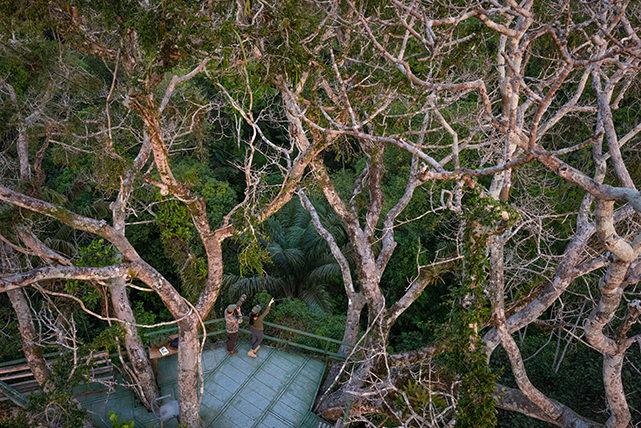 Canopy towers make it possible to observe and photograph macaws, toucans, contingas, tanagers, and mokey troops of several species. © Luis Alcivar
 Flocks of parrots, macaws, and, parakeets will welcome us.
  We will look out for Dusky-headed Parakeet, White-eyed Parakeet, Orange-winged Parrot, Yellow-crowed Parrot, Mealy Parrot, Blue-headed Parrot, Chestnut-fronted Macaw, and Dusky-billed Parrotlet. This amazing road will also offer us other birds like the Great Antshrike, Fasciated Antshrike, White-shouldered Antshrike, Black Antbird, Grey Antbird, Bare-throated Fruitcrow, Cream-colored Woodpecker, Scale-breasted Woodpecker, Red-stained Woodpecker, Little Woodpecker, Lafresnaye's Piculet, Red-crowned Ant-Tanager, Violaceous Jay, Masked Crimson Tanager, and, many more.
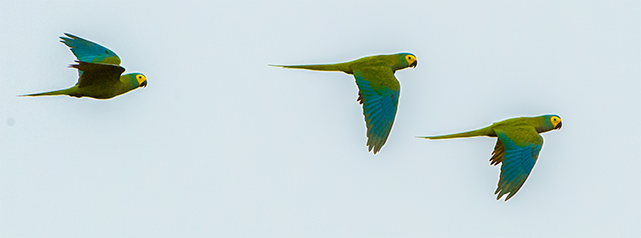 A trio of colorful Red-bellied Macaws overfly the skies of San Jorge Sumaco. © Luis Alcivar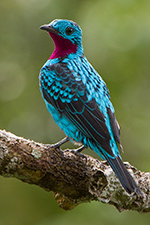
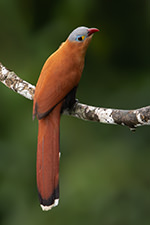 including: Scarlet Macaw, Red-And-Green Macaw, Blue-And-Yellow Macaw, Chestnut-fronted Macaw, Red-bellied Macaw, and the endangered Military Macaw. Other target species will include, the Striped Woodcreeper, Long-billed Woodcreeper, Black-headed Parrot, Spot-breasted Woodpecker, Scale-breasted Woodpecker, Lettered Aracari, White-throated Toucan, Chestnut-eared Aracari, Golden-collared Toucanet, Wing-barred Piprites, Turquoise-browed Tanager, Paradise Tanager, Turquoise Tanager, Black-bellied Cuckoo, Gilded Barbet, Scarlet-crowned Barbet, Yellow-bellied Dacnis, King Vulture, Red-throated Caracara, Plum-throated Cotinga, Spangled Cotinga, and with a bit of luck the Purple-throated Cotinga, and the magestic Harpy Eagle.
 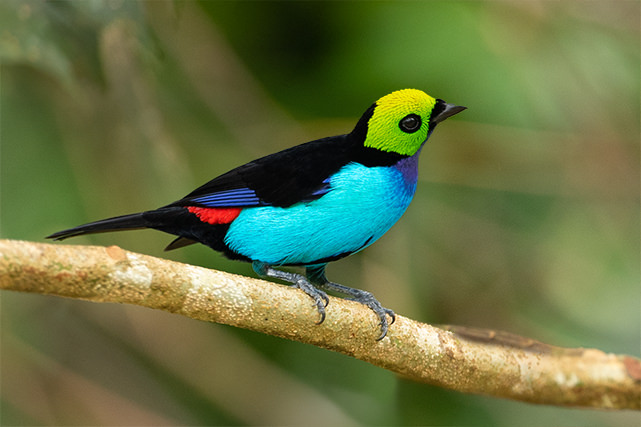 One of the most exhilarating moments of the trip will be when we see the stunning Paradise Tanager atop our Sumaco Bajo canopy tower! © George Cruz
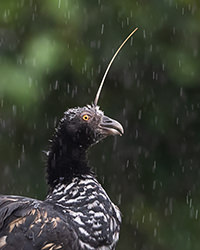 One of the target birds for this place is the strange "unicorn bird" Horned Screamer which is fairly common here but very rare elsewhere. We will also look out for the Zig-Zag Heron,
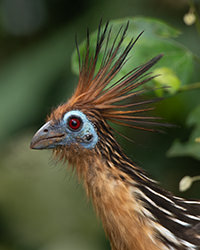 Rufescent Tiger-Heron, Agami Heron, Least Bittern, White-eared Jacamar, Wattled Jacana, Azure Gallinule, Ecuadorian Cacique, Red-capped Cardinal, Hoatzin, Snail Kite, Yellow-headed Caracara, White-fronted Nunbird, Uniform Crake, Long-billed Gnatwren, Solitary Cacique, Grey-cowled Wood-Rail, Laughing Falcon, and several other lagoon-specialist bird species. Several mokey species can also be seen along he edge of the lake, like the Squirrel Monkey and, the world's smallest monkey species, the Pygmy Marmoset.
 Oxbow Lakes are home to unique bird species that will hardly be seen elsewhere © George Cruz
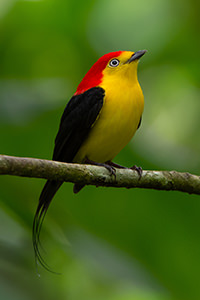 Purplish Jacamar, Purple-throated Fruitcrow, Many-banded Aracari, Ivory-billed Aracari, Red-necked Woodpecker, Golden-green Woodpecker, Pink-throated Becard, Elegant, Yellow-crowned Elaenia, Rufous-tailed Flatbill, Cinnamon-throated Woodcreeper, Slate-colored Hawk, White-browed Purpletuft, Amazonian Umbrellabird, Black-tailed Trogon, White-necked Puffbird, Pied Puffbird, Citron-bellied Attila, Grayish Mourner, Chestnut Woodpecker, Olivaceous Flatbill, Lemon-throated Barbet.
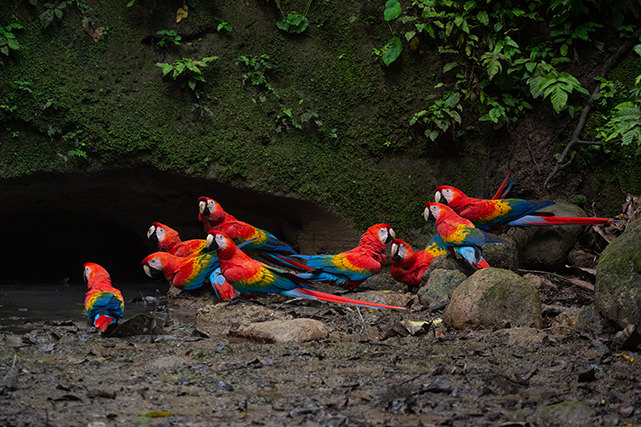 The Scarlet Macaws enjoy the fresh spring water in the heart of the Amazon Jungle. © Jorge Luis Cruz Alcivar
 Be prepared to delve into Ecuador's most biologically-diverse bird photo reserves and eco-lodges to photograph the most vivid tanagers, exotic toucans, and, an absurd amount of hummingbird species. We will setup our
 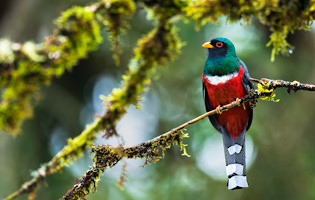 We will go after the Masked Trogon, Squirell Cuckoo, Slate-throated Whitestar, Streak-capped Treehunter, Dusky-capped Flycatcher, Buff-fronted Foliage-Gleaner, Golden-naped Tanager, Black-chested Tanager, Blue-winged Mountain-Tanager, and, with a bit of luck, the Ochre-breasted Antpitta. Seasonally, the wild avocado trees around the hide attract two fabuous species, the Crested Quetzal, and, the Golden-headed Quetzal.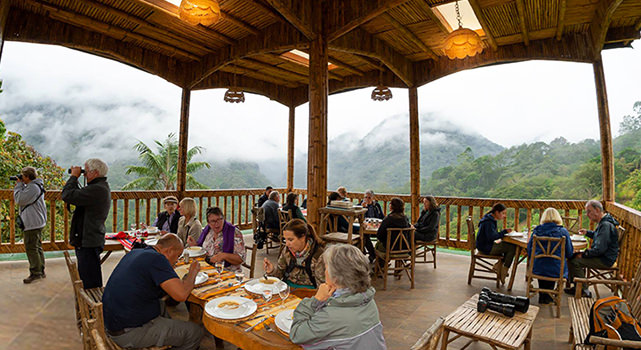
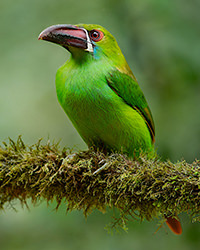 Red-headed Barbet, Three-striped Warbler, White-winged Becard, Metallic-green Tanager, Crimson-rumped Toucanet, Pale-mandibled Aracari, Golden-naped Tanager, Golden Tanager, Flame-faced Tanager, Orange-bellied Euphonia, and, many, more. Additionally, we will do hummingbird photography as our feeders are visited by abounding hummingbird species including the iconic Booted Racket-tail and the Violet-tailed Sylph. The banana feeders at this place are also seasonally visited by the iconic Toucan Barbet, and, the Plate-billed Mountain-Toucan.
 Be enchanted by the breathtaking scenery of the Upper Amazon region. © Jorge Luis Cruz Alcivar
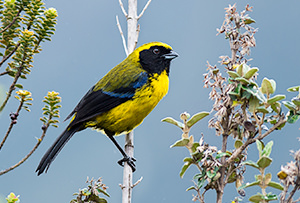 deep-green foothill forests, and, crystal clear rivers that feed into the largest tributary of the Amazon river. This region is exceptionally good for birding for its highly sought-after mountain-toucans, mountain-tanagers, fruiteaters, tanagers, jays, caciques, antbirds, and, notably, for its abounding hummingbird species, most of which don't occur in the Choco slope (5 & 8 day trips). This region is unfortunately missed by most birders, who, unknowingly skip this must-see! birding area by flying directly from Quito to Coca city into the Amazon lowlands which we offer as a separate trip.
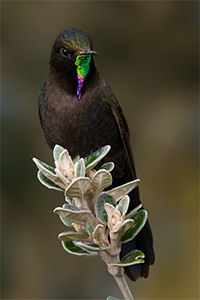 This stunning treeline forest is home to several jewels including the
 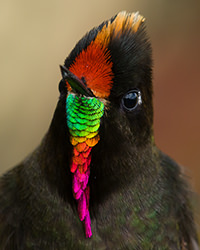 Rufous-bellied Seedsnipe, Black-chested Buzzard-Eagle, Red-rumped Bush-Tyrant, Bar-bellied Woodpecker, White-chinned Thistletail, Many-stripped Canastero, Rainbow-bearded Thornbill, Blue-mantled Thornbill, Viridian Metaltail, Giant Conebill, Paramo Seedeater, Paramo Tapaculo, and, many more. Papallacta Pass it's also one of the best places to see the Andean Bear. We continue birding along the Papallacta Lagoon to record several aquatic bird species that will not occur elsewhere including the Yellow-billed Pintail, Andean Teal, Neotropic Cormorant, and with some luck, the elusive Noble Snipe. At around noon, we will be rewarded with a delicious boxed lunch surrounded by another sublime Andean landscape.
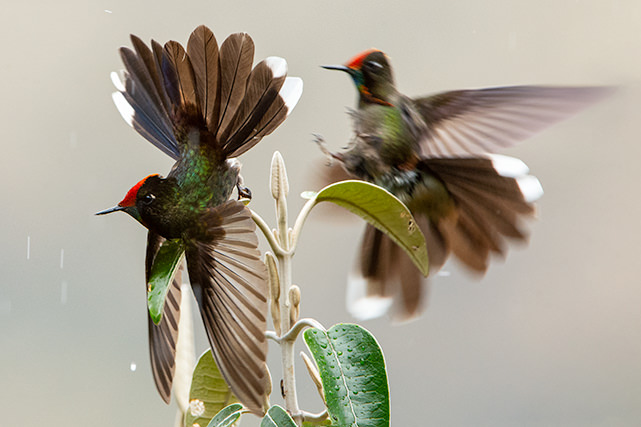 Our upper Amazonia trip visits the best location to see the fabulous Rainbow-bearded Thornbill © Jorge Luis Cruz Alcivar
 Black-backed Bush-Tanager, Pale-naped Brush-Finch, Black-headed Hemispingus, Black-capped Hemispingus, Powerful Woodpecker,Agile Tit-Tyrant, Crowned Chat-Tyrant, Ash-colored Tapaculo, Golden-crowned Tanager, and, a second chance at the elegant Plushcap. After Cayambe Coca, we descend to Cuyuja river and we spend the rest of the afternoon looking for the Torrent Duck, Red-hooded Tanager, Grey-breasted Mountain-Toucan, Black-eared Hemispingus, Slaty Brush-Finch, Citrine Warbler, and with a bit of luck, the Andean Potoo. We will also make a stop by a hummingbird feeding station to look out for the Chesnut-breasted Coronet, Collared Inca, Long-tailed Sylph, Tourmaline Sunangel, and, casually, a Glowing Puffleg. Overnight: Baeza Valley Eco-lodge.
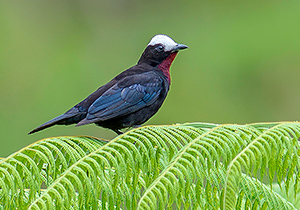 Here, we will bird along "Las Caucheras Road" and some of our target species will include: Chestnut-breasted Chlorophonia, Grass-green Tanager, Andean Motmot, Saffron-crowned Tanager, Yellow-billed Cacique, Mountain Cacique, Streak-headed Antbird, Emerald Toucanet,
 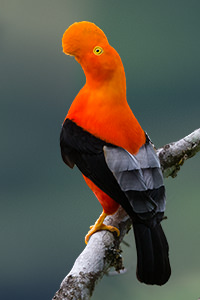 Rufous-headed Pygmy-Tyrant, Green-and-black Fruiteater, Dusky Piha, Capped Conebill, Fawn-breasted Tanager, White-capped Parrot, White-capped Tanager, Lemon-browed Flycatcher, White-bellied Antpitta, Black-billed Mountain-Toucan, and, with a bit of luck, the elusive Wattled Guan. After lunch we explore the Upper Sumaco road to look out for beautiful species such as the Sunbittern, Grey-mantled Wren, Golden-eared Tanager, Short-tailed Antthrush, Long-tailed Tapaculo, Spot-winged Antbird, Spot-breasted Woodpecker, Red-breasted Meadowlark, Southern Lapwing, Chestnut-bellied Seedeater, White-tipped Sicklebill, Violet-fronted Brilliant, Green-backed Hillstar, and, the tiny Gorgeted Woodstar. In the late afternoon we'll visit one of the best Andean Cock-of-the-rock LEK in Ecuador to appreciate the amazing color of the eastern subspecies. Overnight: Baeza Valley Eco-lodge
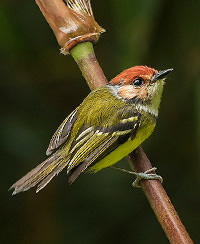 We will look out for the Paradise Tanager, Greenish Puffleg, Booted Racket-tail, Collared Inca, Bronzy Inca,
  Napo Sabrewing, Grey-chinned Hermit, Oleaginous Hemispingus, Deep-blue Flowerpiercer, White-rimmed Brush-Finch, Grass-green Tanager, Blue-browed Tanager, and, with some luck the magnificient Greater Scythebill, and the Scarlet-breasted Fruiteater. We'll have a delicious lunch at our open-air restaurant and we'll continue exploring different trails to look out for the Black-billed Mountain-Toucan, Slate-crowned Antpitta, Blue-naped Chlorophonia, Olivaceous Piha, Golden-collared Honeycreeper, Brown-billed Scythebill, Barred Antthrush, Rufous-crested Tanager, Vermilion Tanager, Black-chested Fruiteater, Black-streaked Puffbird, Yellow-vented Woodpecker, and with a bit of luck the Solitary Eagle, and, the Peruvian Antpitta. Overnight: Baeza Valley Eco-lodge.
 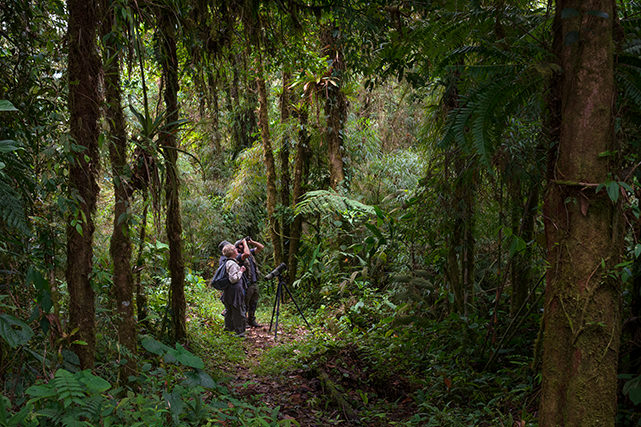 Brand New! San Jorge Sumaco Bird Reserve's stunning forest densely draped with mosses, ferns, orchids, and bromeliads. © Jorge Luis Cruz Alcivar
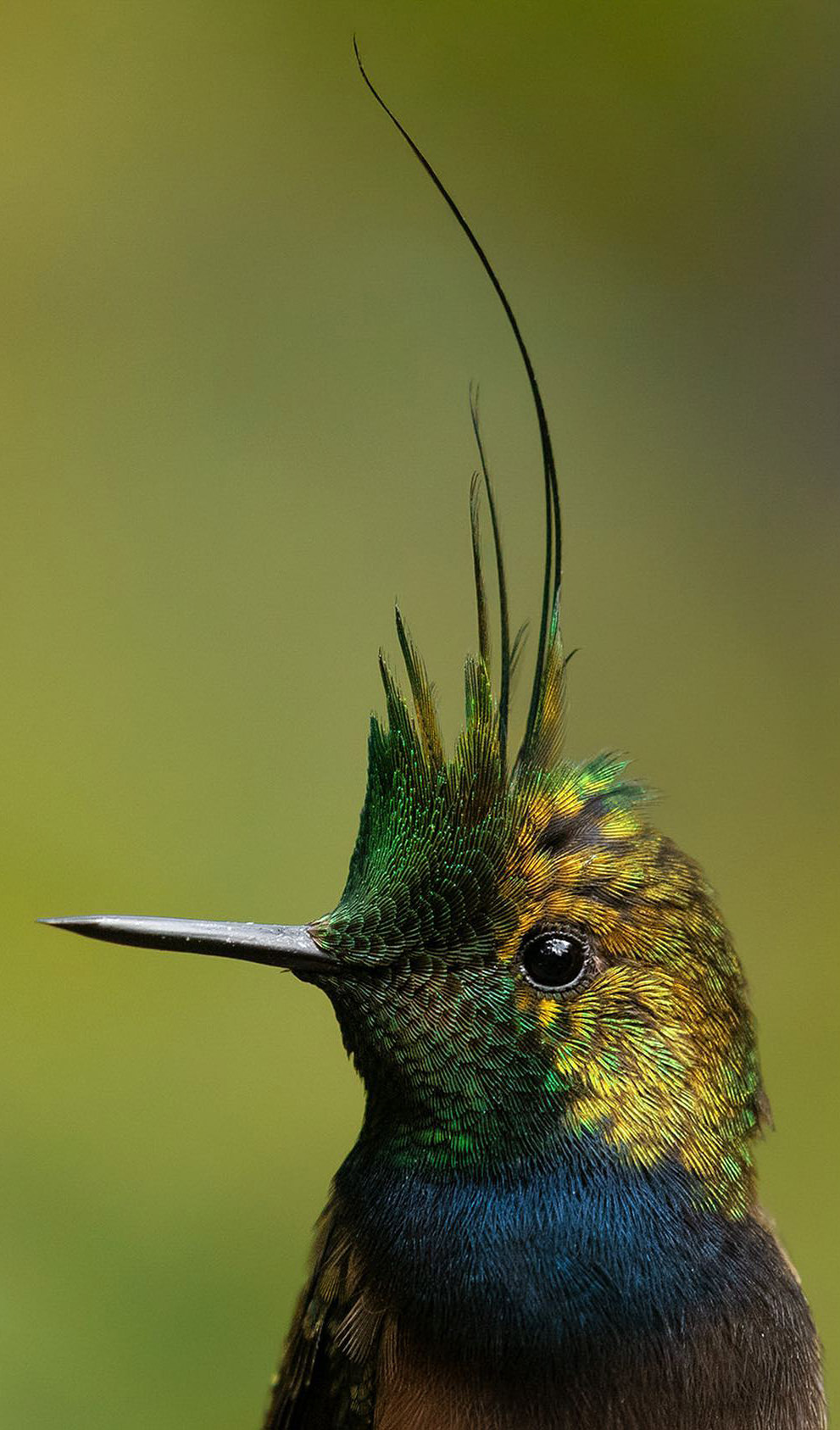 We will look out for the iconic Wire-crested Throntail, Violet-headed Hummingbird, Rufous-throated Sapphire, Napo Sabrewing, Rufous-vented Whitetip, Black-throated Brilliant, Fork-tailed Woodnymph,
 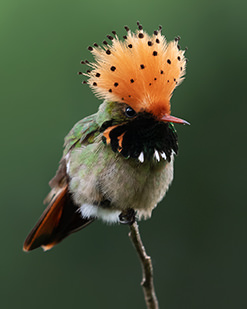 Black-throated Brilliant, Blue-fronted Lancebill, Green Hermit, Ecuadorian Piedtail, Pink-throated Brilliant, and, the amazing Spangled Coquette. We'll have a delicious boxed lunch and we'll continue exploring the reserve for other birds including the Fiery-throated Fruiteater, Lafresnaye's Piculet, Plain-backed Antpitta, Wing-banded Wren, White-crowned Manakin, Coppery-chested Jacamar, Ecuadorian Tyrannulet, Spotted Tanager, Orange-breasted Falcon, Chestnut-crowned Gnateater, and the endangered Military Macaw. Overnight: N/A - 3:00PM transfer to any hotel in Quito area or to Quito airport.
 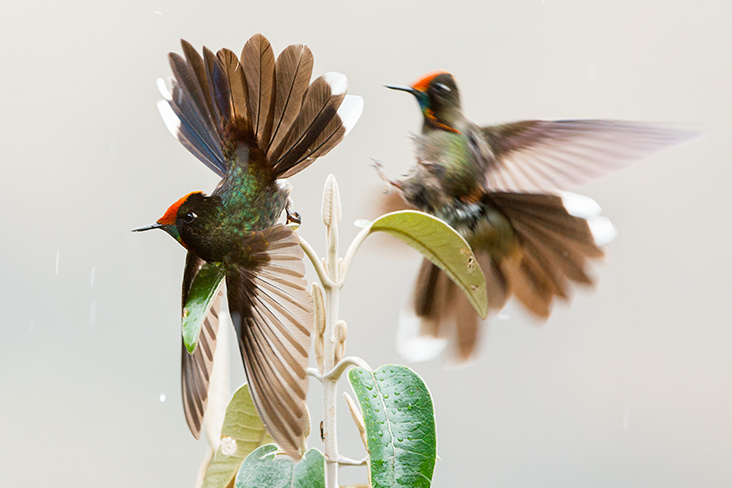 Our upper Amazonia trip visits the best location to see the fabulous Rainbow-bearded Thornbill © Jorge Luis Cruz Alcivar
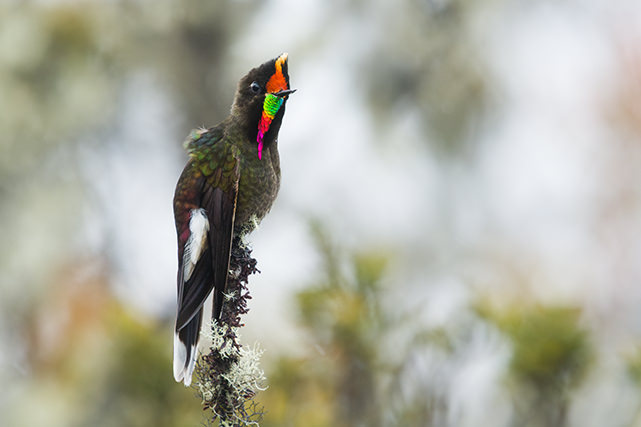 The first day alone may yield three thornbill species, crowned by the majestic Rainbow-bearded Thornbill. © Jorge Luis Cruz Alcivar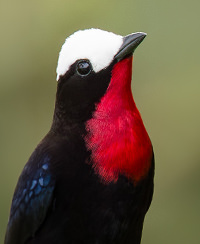
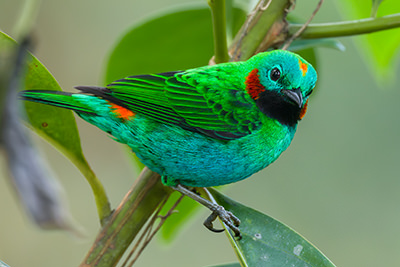 We'll also explore the enchanting hummingbird gardens and feeders to look out for a variety of hummingbird species, including the Long-tailed Sylph, Violet-fronted Brilliant, Green-backed Hillstar, Greenish Puffleg, Green-fronted Lancebill, Tourmaline Sunangel, Chestnut-breasted Coronet, Geoffroy's Daggerbill, Grey-chinned Hermit, Peruvian Raquet-tail, Gorgeted Woodstar, Bronzy Inca, and the occasional Ecuadorian Piedtail. After a delightful lunch, we continue our thrilling birding adventure with careful consideration of weather conditions. As we select a trail, we anticipate the opportunity to spot extraordinary bird species like the Yellow-throated Tanager, Brown-billed Scythebill, Dusky Piha, White-bellied Antpitta, Slate-crowned Antpitta, Oleaginous Hemispingus, Rufous-bellied Nighthawk, Lyre-tailed Nightjar, and with some luck, the Barred Antthrush and the Greater Scythebill. Overnight:
 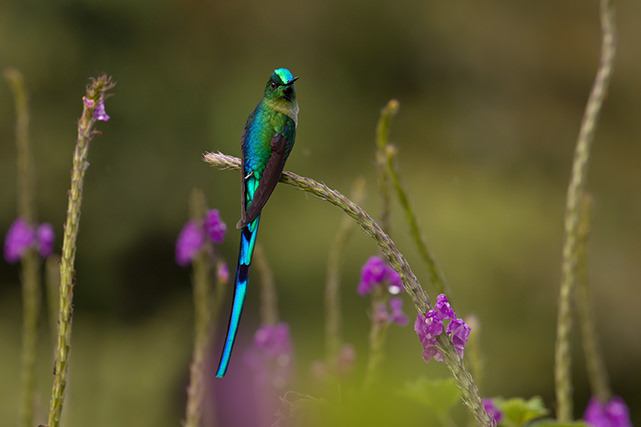 San Jorge Eco-lodge Guacamayos is home to some of the most beautiful hummingbird species including this Long-tailed Sylph. © Jorge Luis Cruz Alcivar
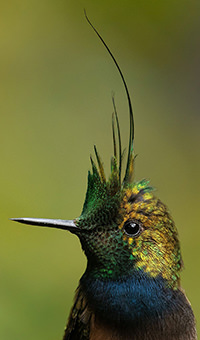 We will look out for the iconic Wire-crested Throntail, Violet-headed Hummingbird, Rufous-throated Sapphire, Napo Sabrewing, Rufous-vented Whitetip, Black-throated Mango, Fork-tailed Woodnymph,